 Dog Dooty Tracker
Tracking & health
Why you should keep a dog bathroom log
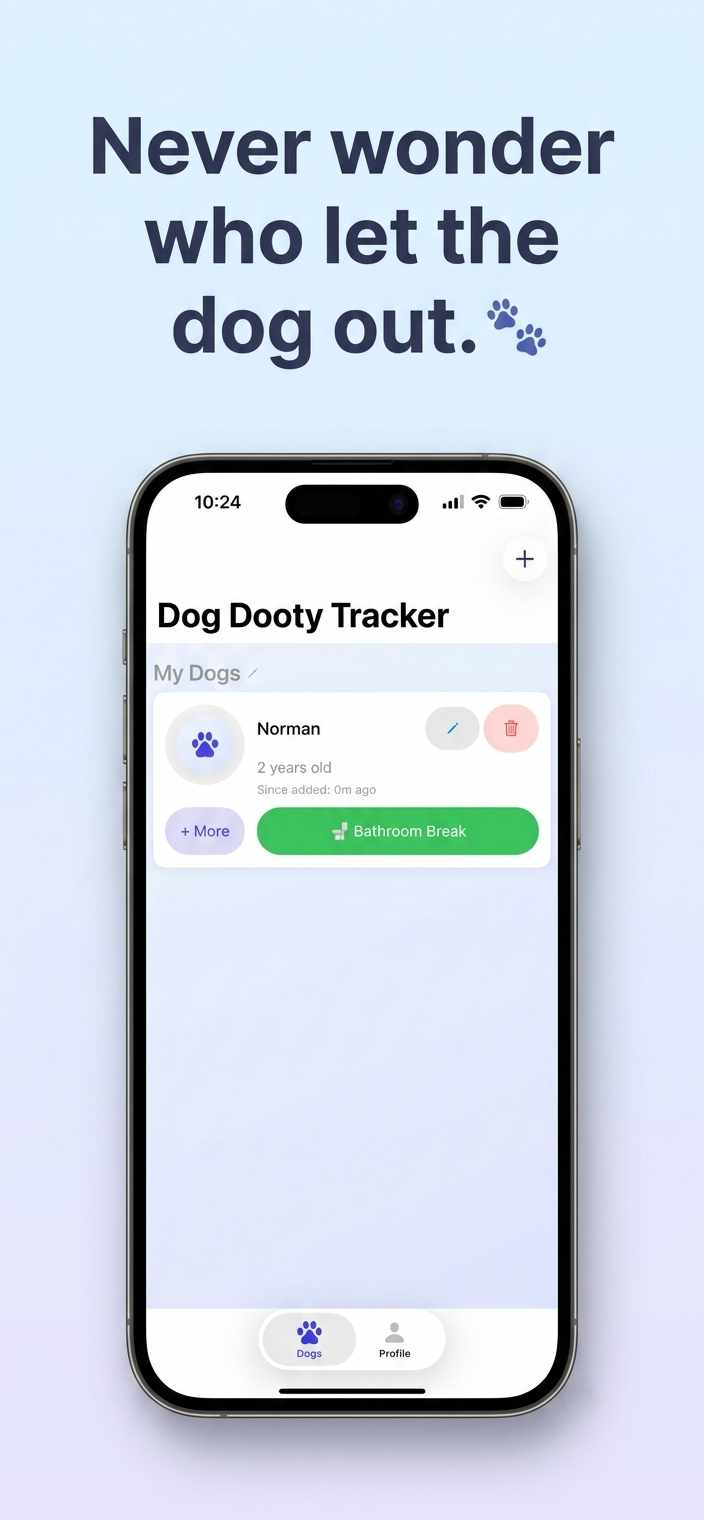
Most people start logging bathroom breaks for house training, but the real long-term value is health monitoring. Bathroom habits are one of the clearest, earliest signals that something is off with a dog, often before other symptoms show up.
What a log actually reveals
- Frequency changes: sudden increases can point to a UTI, diabetes, or kidney issues; decreases can signal dehydration or a blockage
- Timing drift: a dog that used to hold it for 8 hours overnight suddenly needing to go every 4 hours is a pattern worth mentioning to your vet
- Household accountability: in a multi-person household, a shared log means everyone knows the dog's actual schedule instead of assuming someone else handled it
What to actually log
You don't need a detailed journal. Three things matter most:
- Time of each break
- Type: pee, poop, or both
- Anything unusual: straining, color, consistency, blood
That's enough to spot a pattern shift within days, and enough detail to give your vet something concrete if you do need to call.
Why paper logs and memory both fail quickly
A sticky note or whiteboard works for about a week before someone forgets to update it. Memory is worse: most people can't accurately recall bathroom timing beyond "sometime this morning," which isn't useful for spotting a slow drift over weeks.
A log that logs itself
Dog Dooty Tracker timestamps every pee and poop automatically with one tap, works offline, and flags a dog as overdue based on their own history, so the log stays accurate without the effort of a diary.
Get Dog Dooty Tracker